ASN: A3
Cumberland
Darshil Shah
Summer 2018/2019
About
Welcome to my portfolio (A3) website for Aboriginal Sydney Now @ UTS Summer 2018/2019. This portfolio is based on the Cumberland Council Area.
Please click on more underneath the respective categories to view the full page. I hope you enjoy viewing this portfolio as much as I loved creating it.
If there are any website issues please contact me via email.
Traditional Custodians
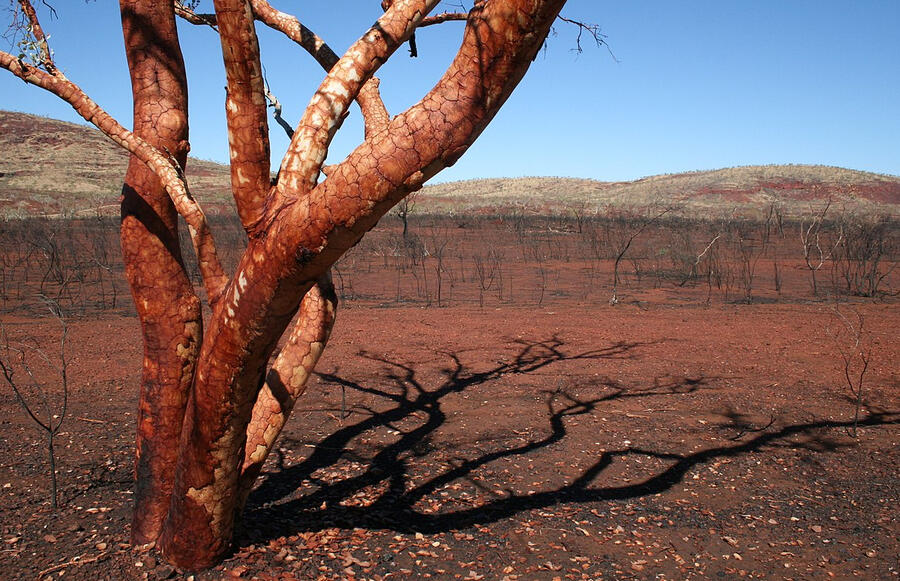
An exploration of the traditional custodians of the land -- the Darug people
Languages
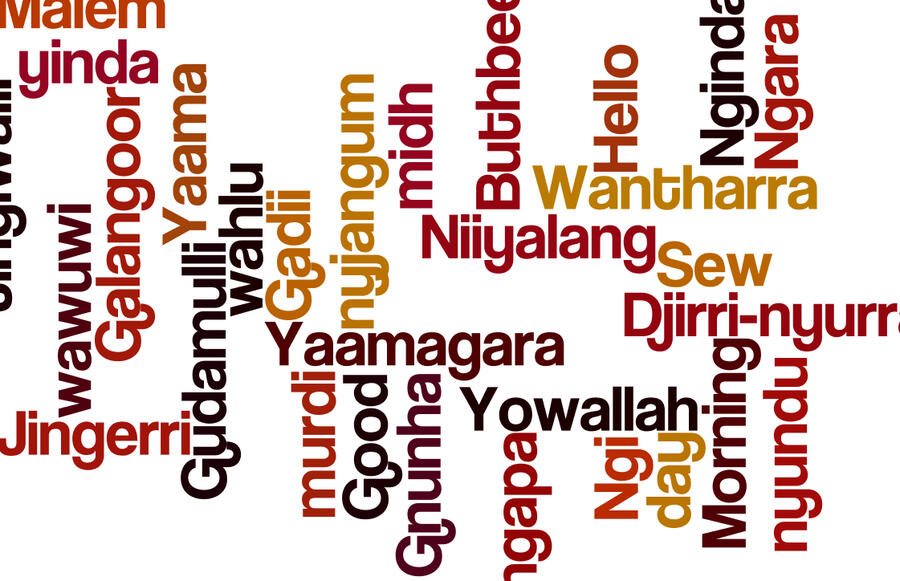
Insight into spoken and practiced
native languages.
Sites of significance
Important, influential areas and places for Aboriginal and Torres Strait Islander people within Cumberland.
Events
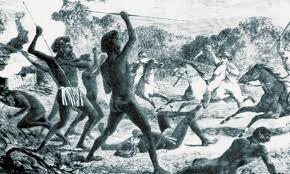
An overview of significant historical events in the Cumberland area that shaped the present.
Indigenous population
Data and statistics about the Indigenous population (age, gender, socioeconomic status)
Indigenous services
Research conducted on finding Indigenous specific services, especially those that are connected to my area of study

Analysis
Insight into the research process along with future thoughts of integration, harmony, and empathy for the Cumberland region.
References
Please follow the link below to view resources used for this portfolio.
All images that are not explicitly referenced have been obtained from Wikimedia Commons via the public domain or via Unsplash.

About
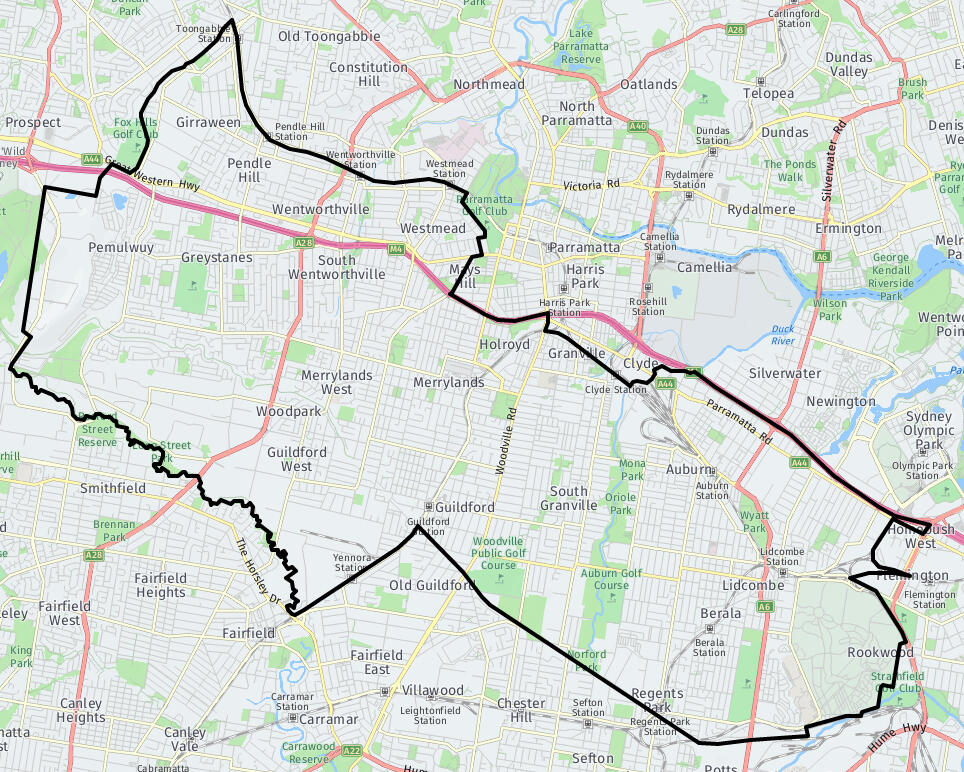
Cumberland council spans across 72km² and has a very rich history, both pre-invasion and post-invasion. As of 2016, the Aboriginal and Torres Strait Islander population is 1,399 (Profile.id 2017). This is almost 50% less than the City of Sydney which has a population of 2,412 Aboriginal and Torres Strait Islander as per the census.
There are many significant sites in the area including but not limited to Prospect Hill, Prospect Creek, and various streets and landmarks that aim to bridge the historical connection of land with their traditional custodians.
Below - map of Cumberland Council as at 2019
Traditional Custodians
The Darug people spanned from Parramatta to Sydney Harbour. Various clans such as the Cennemegal, Burramattagal, and the Bidjigal occupied areas we know as Merrylands, Greystanes, and Parramatta.
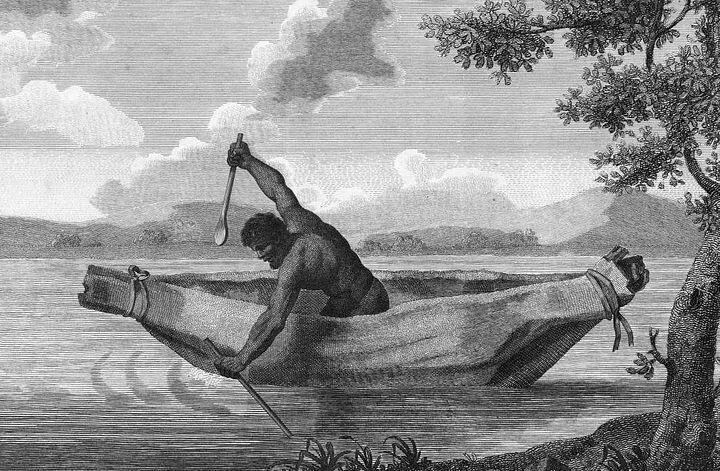
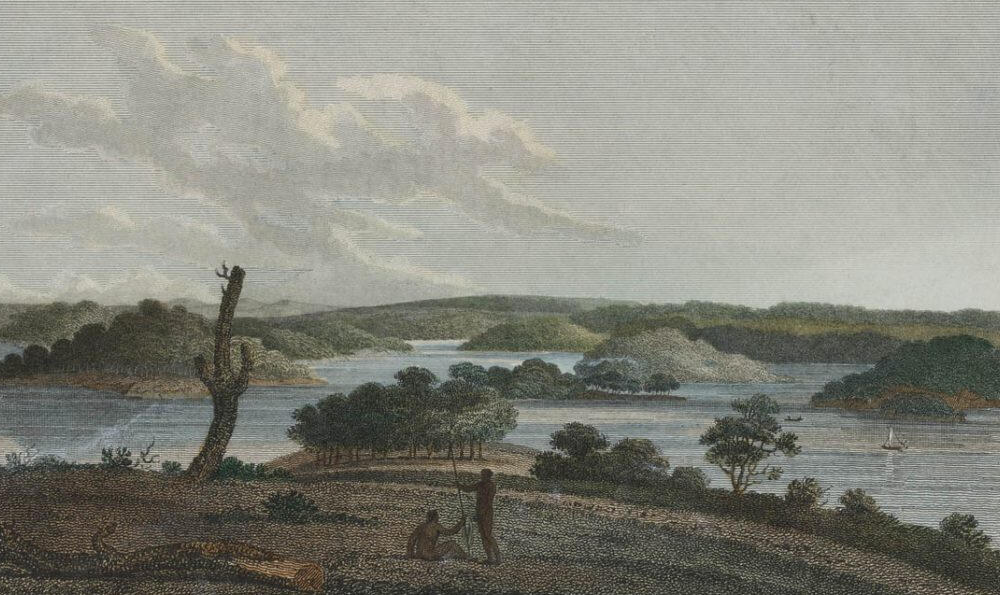
The historical painting below is an emanating view of the Parramatta River from 1798 (By water to Parramatta). Before studying Aboriginal Sydney Now, this painting would evoke a feeling of beauty and tranquility. In contrast, a stronger feeling of empathy is experienced for present caretakers of the land that want to regain this feeling of connection with the land, place, and community.
Language
Whilst languages had various dialects and vocabulary, the languages spoken in the greater Sydney are referred as the Darug language (Troy 1992) and described as the Sydney Language.
As per Cumberland Council (2018) there were numerous dialects that were spoken throughout Sydney and surrounds. For example, the clans in the mountains had a slightly different dialect to the coastal caretakers.
Unfortunately, many Indigenous languages have become extinct since invasion/settlement. It is up to current and future generations to continue the use of these languages and increase their uptake.
It should be noted that the Australian government introduced Indigenous Languages - A National Approach (2009) to create a strategy to preserve the current languages from extinctions. In Cumberland, there have been a variety of exhibitions in Libraries promoting learning some vocabulary from the Darug language.
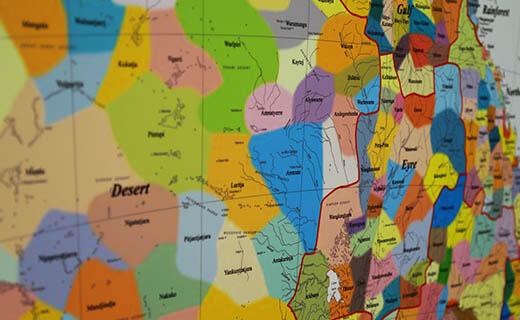
Below is the AIATSIS map of Indigenous Australia that shows the diversity of Indigenous Australia including languages and groups.
Sites of significance
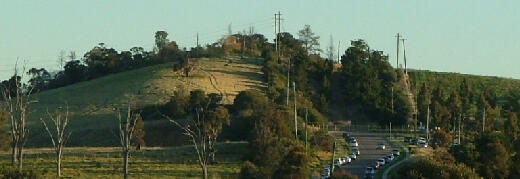
While there are many sites of significance around the Cumberland area, I have focused on some that are closely connected to me through proximity and adolescent memories.
Pictured above is Prospect Hill. It holds great historical importance and is symbolic landmark.
Living close to this natural site, there is a hint of reverence and respect as one passes or drives around the hill.
It is the same hill Watkin Tench would have been in 1789 on his expedition to from Parramatta to Prospect Hill (Cumberland Council 2018).
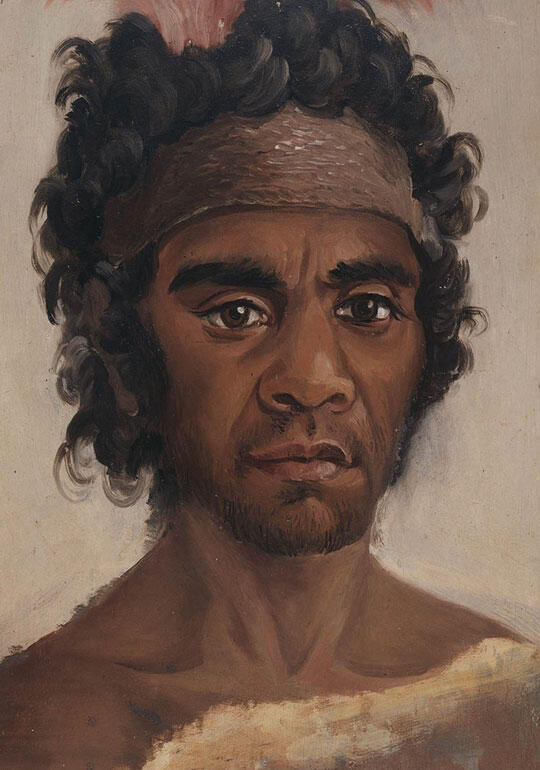
Extending from Prospect Hill is the other site of significance, Pemulwuy. The image featured on the home page of this website is one of Pemulwuy, a Bidigal clan leader. He was a warrior that resisted the crimes against his fellow clan members and the wider Indigenous population. He is further honoured through the suburb Pemulwuy and through Pemulwuy Park in Redfern.
Events of Historical Significance
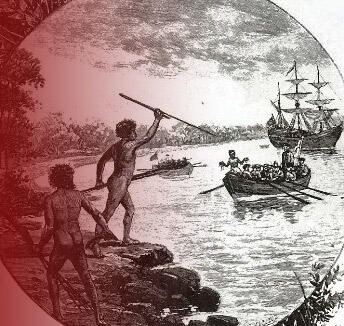
It has been an interesting exercises investigating and recounting the history behind the Cumberland local area.
As described earlier, European settlers explored the area in the late 1700s where Prospect Hill was a large part of this journey. This would be the most significant event.
Unfortunately, one of the first accounts recorded of European exploration of this area include the observation of small pox (Cumberland Council 2018). Many studies have been done on the outbreak of smallpox in Sydney during 1789 (Mear 2008) that estimate up to 70% mortality for Indigenous people. The European settlers also suffered but were able to build a resistance to the disease.
Indigenous Australians suffered very high death rates and were subjected to more diseases as the spread of settlers spread (influenza, measles, TB).
On a positive note, 3/5/1805 marked the first recorded reconciliation held between Europeans and Aboriginal Australians at Prospect Hill. This event is celebrated annually.
Population
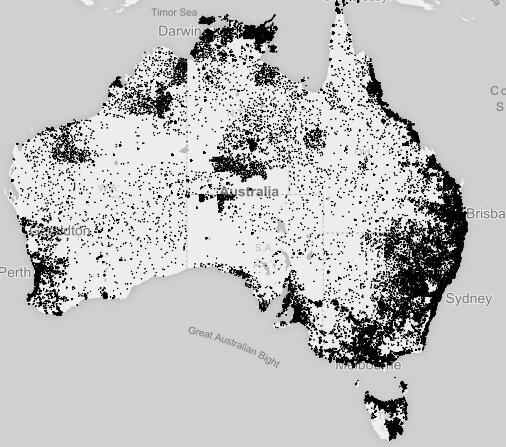
The main source for population and demographic statistics is the national Australian census performed every 5 years.
The general trend recorded through the 2016 Australian Census was generally positive (The Conversation, 2016).
Population
Within the Cumberland area, the population change from 2011 to 2016 was not notable in terms of the data available (Profile.id 2016). It is interesting to see that coastal areas experience the highest population growth. This is a good research topic for the future in my view. This can be visually seen in the map above (Saberi et al, 2015)
Education
A positive change in completion of high school and attendance of tertiary education is a welcomed statistic. Various programs and education policies introduced throughout this subject were important to understand and continue to implement going into the future (Profile.id 2016).
Age and Gender
As identified in prior subject learning, life expectancy is an important gap to address between Indigenous and non-indigenous people (SBS, 2017). Whilst total population increased in 2016, the age bracket of 12-17 decreased. This could be attributed to a migration of youth to other parts of Sydney or Australia for better opportunities.
Gender on the other hand is fairly evenly represented by the data available. Male population has increased faster than female population (Profile.id 2016)
Services
Indigenous Services
Parramatta Koori Interagency - I was surprised to find such a unique service that helps create a network of Aboriginal and Torres Strait Islander people. This is also a way to connect individuals to larger organisations such as government agencies, financial agencies, medical staff and more.Unfortunately, I could not find any digital or programming literacy services available in the area. Whilst this is offered as a mainstream service, it is important that it be adapted for the Indigenous Australian audience. This could occur via consultations and drawing inspiration from culture, history, and the Dreaming. The council does facilitate traditional ceremonies and welcomes. There is a cultural guideline that must be followed and a fee must be made payable by the requestors to support the participants and the wider community.
Mainstream Services
Parramatta Library - Computer and Technology Drop In Sessions - A fantastic service for anyone having issues with technology to receive help and guidancePrimary Health Care Education and Research Unit @ Westmead - AN organisation that focuses on education and training young people to manage their health.
Analysis
Aboriginal Sydney Now (Summer 2018) has been a exceptional subject to facilitate understanding and awareness of the place we now call home. Through readings, media, reflective experiences, and original research it has solidified my understanding of how I empathise, relate, and support the experiences and efforts of Australian Indigenous and Torres Strait Islanders.
I would like to leave this quote below for the instructors and for anyone else that visits this website in the future:
"We are all visitors this time, this place. We are just passing through. Our purpose here is to observe, to learn, to grow, to love... and then we return home."
- Australian Aboriginal Proverb
References
Census 2016: what's changed for Indigenous Australians? 2016, The Conversation. viewed 24 February 2019, <https://theconversation.com/census-2016-whats-changed-for-indigenous-australians-79836>.
Cumberland Ward Maps | Cumberland Council 2018, Cumberland.nsw.gov.au. viewed 24 February 2019, <https://www.cumberland.nsw.gov.au/council/my-community/cumberland-ward-maps>.
Darug People and the Environment 2017, Heritage Archives and Library Research and Collection Services. viewed 24 February 2019, <http://arc.parracity.nsw.gov.au/blog/2017/07/17/darug-people-and-the-environment/>.
Human Rights Australia 2015, Indigenous Languages - A National Approach, Australian Human Rights, Sydney, pp. 183-186.
Indigenous population statistics | Cumberland Council area | profile.id 2019, Profile.id.com.au. viewed 24 February 2019, <https://profile.id.com.au/cumberland/indigenous-keystatistics>.
Mear, C. 2008, The origin of the smallpox outbreak in Sydney in 1789, Journal of the Royal Australian Historical Society, vol 94, no 1, viewed 24 February 2019, <https://search.informit.com.au/documentSummary;dn=200806636;res=IELAPA;type=pdf>.
Saberi, M. 2011, Indigenous Population Dot Map of Australia, Monash.edu. viewed 24 February 2019, <http://www.monash.edu/research/city-science/indigenousaustralia/>.
Troy, J. 1992, The Sydney Language Notebooks and responses to language contact in early colonial NSW, Australian Journal of Linguistics, vol 12, pp.145-170, viewed 24 February 2019, <http://www.williamdawes.org/docs/troypaper.pdf>.